Exploring the Benefits of Custom Machining for Military Aircraft Components
The Role of Custom Machining in Aerospace Manufacturing
Understanding Aerospace Machining Services
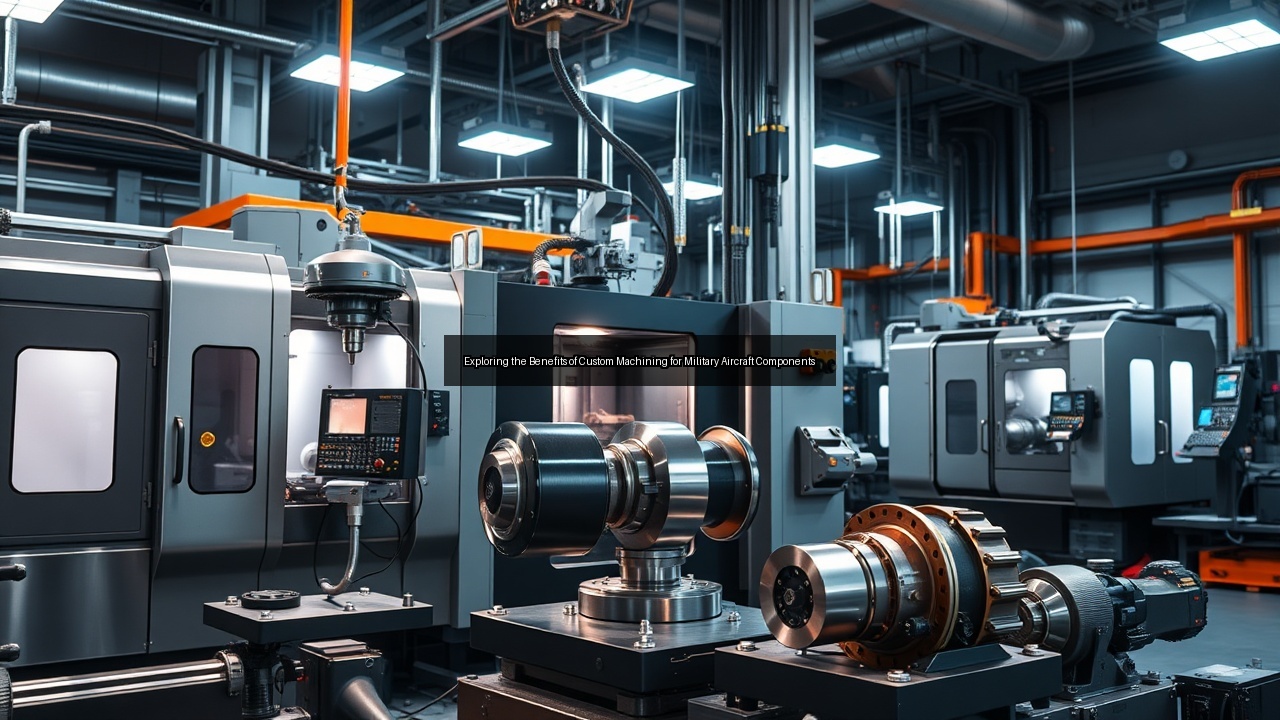
Aerospace machining services play a critical role in the manufacturing of military aircraft components. These specialized services encompass a range of machining processes, including milling, turning, and drilling, aimed at producing precise and complex parts essential for the aerospace industry. Machinists utilize advanced CNC machining techniques to ensure high accuracy and repeatability, which are vital for maintaining the stringent standards required in military applications. The demand for reliable and high-performance components in military aircraft necessitates the integration of custom machining solutions. These solutions allow for tailoring parts to meet specific design requirements while ensuring compatibility with existing systems in the aircraft. The customization aspect is particularly important in military applications where mission-specific needs can vary greatly, requiring adaptability in manufacturing processes.
Key Materials Used in Military Aircraft Components
Material selection forms the backbone of aerospace component machining, especially in military applications where durability and performance are paramount. Common materials include titanium, aluminum, and steel. Titanium, known for its excellent strength-to-weight ratio, withstands extreme temperatures and corrosion, making it ideal for turbine blades and other critical components. Its biocompatibility also opens doors for applications in medical devices, demonstrating its versatility beyond aerospace. Aluminum, favored for its lightweight properties, is extensively used in airframes and structures, ensuring optimal fuel efficiency without compromising strength. Steel and stainless steel are employed for parts requiring high tensile strength and wear resistance, particularly in landing gear and structural components. Additionally, cobalt and titanium alloys find their place in specialized components, enhancing performance under demanding conditions. Understanding these materials is crucial for machinists to execute precision aerospace machining effectively, as each material presents unique challenges and benefits during the machining process.
Advantages of Precision Machining for Military Aircraft
Enhancing Reliability and Safety
Precision machining significantly enhances the reliability and safety of military aircraft components. The rigorous testing and quality assurance processes involved in aerospace machining services ensure that each part meets the highest safety standards. Machinists leverage cutting-edge technology to achieve unparalleled accuracy in production, reducing the risk of failure during critical operations. By utilizing advanced CNC machining, manufacturers can create components with tight tolerances that fit seamlessly within the complex architecture of military aircraft. This attention to detail directly impacts the overall performance and safety of the aircraft, making precision machining an indispensable aspect of military aviation. Moreover, the integration of advanced simulation software allows machinists to predict potential failures and optimize designs before production, further ensuring safety and reliability.
Optimizing Engine Performance with CNC Machining
CNC machining serves as a cornerstone for optimizing engine performance in military aircraft. The ability to create intricate designs and complex geometries allows for the production of advanced engine components, such as turbine blades and casings. These components require high precision to ensure optimal airflow and fuel efficiency, directly affecting the aircraft's operational capabilities. Machinists utilize sophisticated tools and techniques to refine these parts, ensuring they meet the demanding specifications of military engines. By focusing on precision and accuracy, CNC machining not only enhances engine performance but also contributes to the overall mission readiness of military aircraft. Furthermore, the use of computer-aided design (CAD) software allows for the rapid prototyping of engine components, enabling quicker iterations and modifications that align with the ever-evolving technological landscape of military aviation.
The Importance of Material Selection: Titanium, Aluminum, and Steel
Choosing the right materials for machining aerospace components is crucial for achieving the desired performance and durability. Titanium's strength and lightweight nature make it ideal for high-stress components, while aluminum’s malleability allows for easy shaping and fabrication, making it a staple in both structural and non-structural applications. Steel, known for its robustness, is often used in components that endure significant wear and tear, such as gears and fasteners. Stainless steel, with its resistance to corrosion, is frequently employed in manufacturing parts exposed to harsh environments, including hydraulic systems and fuel lines. The strategic use of these materials in custom aerospace machining services ensures that military aircraft can withstand the rigors of operation while maintaining reliability and efficiency. Knowledge of these materials empowers machinists to produce components that meet or exceed military standards, ultimately enhancing the aircraft's longevity and performance in various operational theaters.
Innovations in Aerospace Machining Technology
Industrial Automation in Aerospace Machining
Industrial automation is revolutionizing the aerospace machining landscape. By integrating automated systems into machining processes, manufacturers can enhance efficiency, reduce production times, and minimize human error. Automation technologies such as robotic arms and automated CNC machines streamline operations, allowing machinists to focus on more complex tasks. This shift not only increases productivity but also ensures a higher level of consistency and precision in the production of military aircraft components. Additionally, the implementation of machine learning algorithms enables predictive maintenance of machining equipment, reducing downtime and enhancing overall operational efficiency. As the aerospace industry continues to evolve, adopting industrial automation will remain a key driver in improving machining capabilities, ultimately benefiting military operations.
Advancements in CNC Machining for UAVs and Missiles
Recent advancements in CNC machining technology have significantly impacted the production of unmanned aerial vehicles (UAVs) and missiles. The precision required for these components demands cutting-edge techniques and tools that can accommodate complex designs and materials. Innovations such as multi-axis CNC machining enable machinists to create intricate parts that would be impossible with traditional methods. These multi-axis systems allow for greater flexibility in design and can produce highly detailed components in a single setup, reducing the need for multiple machining operations. Additionally, the integration of 3D printing in conjunction with CNC machining opens new avenues for rapid prototyping and production of aerospace components. By leveraging these advancements, manufacturers can accelerate the development of UAVs and missiles while ensuring top-notch quality and performance. The versatility of hybrid manufacturing techniques—combining traditional machining with additive manufacturing—further enhances production capabilities, allowing for the creation of lightweight structures that retain strength and functionality.
Challenges and Considerations in Aerospace Component Machining
Addressing Tolerances and Precision in Machining
The aerospace industry imposes stringent tolerances and precision requirements on machined components. Achieving these tolerances poses a significant challenge, as even minor deviations can lead to catastrophic failures. Machinists must utilize advanced measuring tools and techniques to ensure that each part meets the exact specifications required for military aircraft. Techniques such as laser scanning and coordinate measuring machines (CMM) are crucial for verifying dimensions and ensuring compliance with exacting standards. Continuous improvement in machining processes, combined with rigorous quality control measures, is essential to address these challenges. By focusing on precision and accuracy, aerospace machining services can deliver components that contribute to the overall reliability and safety of military operations. Moreover, the implementation of real-time monitoring systems during machining processes allows for immediate detection of variances, enabling swift corrective measures.
The Role of Machinists in Achieving Quality Standards
Machinists play a pivotal role in maintaining quality standards within aerospace component machining. Their expertise and attention to detail ensure that each part undergoes thorough inspection and testing before it is integrated into military aircraft. Skilled machinists understand the complexities of various materials and machining techniques, allowing them to adapt to different manufacturing challenges. Their ability to interpret engineering drawings and specifications directly impacts the success of the machining process. Investing in training and development for machinists is crucial for the aerospace industry to achieve higher standards of quality and performance in military aircraft components. Continuous education and upskilling in emerging technologies such as robotics and software tools also empower machinists to remain at the forefront of the industry, ensuring that they can meet the evolving demands of military aviation and contribute to the advancement of aerospace manufacturing as a whole.
See Also
- Unlocking Precision in Aerospace Machining for the Future of Flight
- The Role of Semiconductors in High-Tech Aerospace Machining
- Crafting Turbine Blades with Precision in Aerospace Machining
- Unlocking the Future of Flight with Precision Aerospace Machining Services
- From UAVs to Spacecraft the Versatility of Aerospace Machining